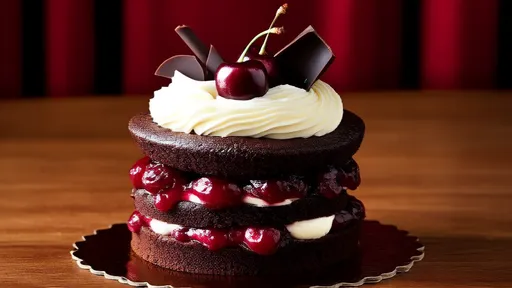
Nestled within the culinary traditions of Germany's Black Forest region lies a dessert that has captivated palates worldwide: the Schwarzwälder Kirschtorte, or Black Forest Cake. While its layers of chocolate sponge, whipped cream, and cherries present an image of indulgent simplicity, the true artistry of this classic confection is often hidden in the nuances of its preparation. Among these, the management of moisture in the kirsch-soaked cherries stands as a critical, yet frequently overlooked, pillar of excellence. It is a delicate dance between flavor infusion and structural integrity, a balance that separates a good cake from an extraordinary one.
The journey of these cherries begins long before they meet the cake. Traditionally, morello cherries, known for their tartness and firm texture, are the fruit of choice. They are preserved in a syrup or their own juices, often before being introduced to the kirschwasser, the clear cherry brandy that gives the cake its name and a distinctive alcoholic kick. The process of maceration—soaking the fruit in the spirit—is where the first stage of moisture control occurs. The goal is not merely to douse the cherries in alcohol but to facilitate a gradual exchange. The kirsch permeates the fruit's cellular structure, replacing some of its water content and imparting its potent, aromatic flavor. Conversely, the cherries release their natural sugars and juices into the surrounding liquid, creating a richer, more complex syrup. The duration of this maceration is paramount; too short, and the flavor is superficial and harsh; too long, and the cherries can become unpleasantly boozy and lose their structural definition, turning mushy and difficult to handle.
This leads to the core challenge: hydration versus saturation. A perfectly prepared cherry should be plump and moist, bursting with the combined essence of its own fruitiness and the sharp, clean notes of kirsch. However, it must retain enough firmness to be easily positioned within the cake layers and to provide a pleasant textural contrast to the soft sponge and airy cream. An oversaturated cherry becomes a liability. It acts like a tiny water balloon, threatening to rupture during assembly and release a flood of liquid. This excess moisture is the arch-nemesis of the cake's architecture. It can quickly seep into the delicate chocolate sponge, causing it to become soggy, dense, and prone to collapsing under the weight of the cream. Furthermore, it can destabilize the whipped cream, causing it to weep, deflate, and lose its luxurious, cloud-like consistency. The result is a cake that is visually slumping and texturally disappointing, with layers that blur into a wet, homogenous mass rather than offering distinct, complementary experiences.
Master pastry chefs, therefore, employ several techniques to exert precise control over this variable. The first is selection. Using high-quality, firm cherries to begin with provides a stronger foundation. Before maceration, cherries preserved in a heavy syrup are often drained, and sometimes even lightly rinsed and patted dry, to remove excess external sweetness and liquid, allowing the kirsch to be the primary infusing agent. The maceration liquid itself is sometimes adjusted; a small amount of sugar can be added to the kirsch to create a osmotic balance, slowing the rate of liquid exchange and preventing the cherries from absorbing too much alcohol too quickly. Some recipes call for a brief heating of the cherries with the kirsch, which helps the fruit absorb the flavor more efficiently in a shorter time, reducing the risk of over-soaking.
The most crucial step, however, happens after maceration and before assembly: draining. The cherries are meticulously removed from their alcoholic bath and allowed to drain thoroughly. This is not a passive process. They are often placed on wire racks or paper towels for a significant period, ensuring that any unbound surface liquid is eliminated. The precious, flavor-packed syrup that drains off is rarely discarded. It is frequently reduced over gentle heat to concentrate its flavor and thicken its consistency, making it less prone to immediately soaking into the sponge. This reduced syrup can then be brushed sparingly onto the cake layers, providing intense flavor without an overwhelming amount of moisture. This technique allows the baker to decouple the intense flavoring step from the dangerous act of adding liquid.
The assembly of the cake itself is a lesson in strategic moisture management. A common practice is to create a "dam" of stabilised whipped cream around the outer edge of each sponge layer before scattering the well-drained cherries in the center. This barrier helps to contain any residual moisture the cherries might release, protecting the outer structure of the cake and the final layer of cream frosting from unsightly pink streaks or sogginess. The sponge layers are also never drowned in syrup; they are lightly and evenly brushed, ensuring they become flavorful and tender but never wet.
Ultimately, the handling of the kirsch-soaked cherries in a Black Forest Cake is a testament to the precision and foresight required in patisserie. It transcends mere recipe following and enters the realm of culinary science. It is an understanding of osmosis, viscosity, and structural engineering. The baker must anticipate the behavior of every component over time, from the moment the cherries are jarred to the point the cake is sliced. When executed with skill, the cherries are little gems of intense flavor that enhance every element around them without compromising a single one. They offer a juicy burst that is both expected and surprising, a testament to a balance struck perfectly between the robust spirit of the Black Forest and the delicate, ephemeral nature of a perfect cake. This invisible craftsmanship is what transforms a collection of ingredients into a legendary dessert.
By /Aug 20, 2025

By /Aug 20, 2025
By /Aug 20, 2025
By /Aug 20, 2025
By /Aug 20, 2025
By /Aug 20, 2025
By /Aug 20, 2025
By /Aug 20, 2025

By /Aug 20, 2025
By /Aug 20, 2025
By /Aug 20, 2025
By /Aug 20, 2025
By /Aug 20, 2025
By /Aug 20, 2025
By /Aug 20, 2025
By /Aug 20, 2025
By /Aug 20, 2025

By /Aug 20, 2025
By /Aug 20, 2025
By /Aug 20, 2025
