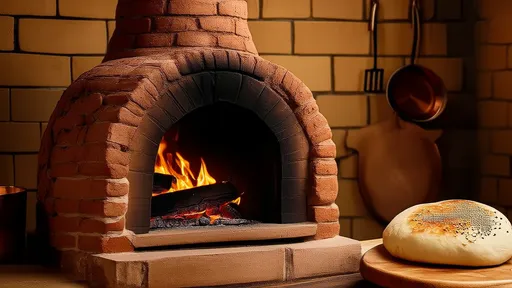
For centuries, the tandoor oven has been the heart of Middle Eastern and South Asian culinary traditions, a cylindrical clay vessel that breathes life into flatbreads and imparts a unique, smoky character to meats. Its intense, radiant heat, often exceeding 900°F (480°C), is the alchemy behind the perfect naan or laffa—a blistered, chewy, and impossibly light texture that home bakers have long viewed as the holy grail. The quest to replicate these results in a standard home electric or gas oven is not about finding an exact duplicate; that’s an impossibility. It is, instead, an exercise in clever simulation, a series of techniques aimed at capturing the spirit of the tandoor by manipulating our modern appliances to their absolute limits.
The core challenge lies in the fundamental difference between the two heating methods. A tandoor is a beast of direct, radiant heat. The fire burns at its base, heating the thick clay walls which then radiate that immense thermal energy directly onto the food. There is no convection, no circulating hot air. The bread is slapped directly onto the searing-hot interior wall, cooking in mere minutes from a combination of this radiant heat and the live flames below. A home oven, by contrast, is a much tamer environment. It relies primarily on convective heat (in a fan-assisted oven) or a combination of convective and conductive heat from the metal elements and walls (in a conventional oven). Its maximum temperature typically caps at 500-550°F (260-290°C), a fraction of a tandoor's ferocity. The goal, therefore, is to preheat in such a way that we maximize radiant heat and create intense, localized high-temperature zones.
The first and most non-negotiable step is an exceptionally long preheat. This is not the 20-minute warm-up you might use for a roast. To even begin mimicking a tandoor's stored thermal energy, your oven needs to work for a long time to saturate every component with heat. For this task, you must set your oven to its absolute highest temperature setting, whether that is 500°F, 550°F, or the broiler setting. Once it signals it has reached temperature, do not stop. Allow it to continue heating for a further 45 minutes to a full hour. This extended period allows the oven's stone or steel baking surface, the walls, and even the door to absorb and hold a massive amount of heat, creating a more stable and intense environment that won't crash in temperature the moment you open the door.
Choosing the right baking surface is arguably the most critical factor for success. You cannot bake tandoor-style bread on a flimsy aluminum sheet pan. That thin metal will never hold enough heat to create the necessary instant oven-spring and blistering. You need a thermal mass—a dense, heavy object that acts as a battery, storing intense heat and releasing it rapidly into the dough. The two best options are a baking steel or a pizza stone. A baking steel, typically a quarter- to half-inch thick slab of food-grade steel, is superior due to its incredible thermal conductivity; it transfers heat to the dough faster than any other material, promoting explosive rise and char. A high-quality cordierite pizza stone is also an excellent choice, though it heats and transfers heat slightly slower than steel. Whichever you choose, it must be placed in the oven on a rack positioned in the upper-third of the cavity for the entire duration of the marathon preheat.
To truly simulate the tandoor's top-down radiant heat, the broiler element must be employed strategically. During the final 15 to 20 minutes of the preheating cycle, switch the oven from its standard bake mode to the high broiler setting. This engages the top heating element at full power, blasting the baking steel or stone below with direct, radiant heat from above, superheating its surface to temperatures that can approach 700°F (370°C) or higher. This creates a miniaturized version of the tandoor's ceiling-like radiant heat source. The moment you are ready to bake, you will switch the oven back to its regular high-bake setting to avoid instantly burning the top of your bread, but the stored energy in the stone or steel will do the primary work of cooking the bottom and springing the dough.
The act of loading the oven, or the "launch," is a skill in itself. The intense heat you've worked so hard to build is incredibly fragile and will plummet the second the oven door is opened. Your prepared flatbreads must be shaped, topped, and ready to go on a peel dusted with semolina or rice flour to prevent sticking. Work with speed and confidence. Open the door, slide the bread directly onto the screaming-hot surface, and close the door immediately. The steam released from the dough hitting the hot surface is actually desirable and contributes to a temporary humid environment that aids in a better rise and a glossier crust. For an even more authentic touch, some bakers will very lightly mist the oven walls with water just before launching the bread to create a burst of steam.
While flatbreads are the most obvious candidate for this technique, the principles of high-heat simulation can be applied to certain tandoori meats, particularly smaller, skewered items like chicken tikka or seekh kebab. The goal here is to replicate the tandoor's combination of intense radiant heat and live fire char. Preheat your oven and a heavy cast-iron skillet or the baking steel using the same extended method. Place the skewered meats directly onto the preheated surface. For the final minute or two, switch the oven to broil again to char the tops of the kebabs, mimicking the licking flames at the base of the tandoor. The result will be juicy, cooked-through meat with a beautifully caramelized and slightly charred exterior, a world away from a steamed or boiled texture.
Mastering these techniques requires practice and an acceptance that your home kitchen has physical limitations. You will not produce a carbon copy of a bread baked in a centuries-old, wood-fired clay oven. However, by understanding the science of the tandoor and applying these aggressive preheating and heat-storage methods, you can achieve a remarkable facsimile. The blistered, leopard-spotted crust, the soft and airy interior, and the subtle hint of smoky char will transport your senses, offering a genuine taste of a tradition forged in fire, all from the confines of your own kitchen.
By /Aug 20, 2025

By /Aug 20, 2025
By /Aug 20, 2025
By /Aug 20, 2025
By /Aug 20, 2025
By /Aug 20, 2025
By /Aug 20, 2025

By /Aug 20, 2025
By /Aug 20, 2025
By /Aug 20, 2025
By /Aug 20, 2025

By /Aug 20, 2025

By /Aug 20, 2025
By /Aug 20, 2025

By /Aug 20, 2025

By /Aug 20, 2025
By /Aug 20, 2025
By /Aug 20, 2025
By /Aug 20, 2025
By /Aug 20, 2025
